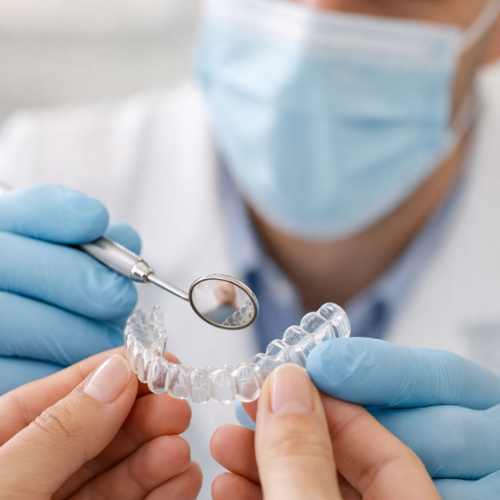
Why Your Invisalign Trays Aren't Fitting — and What to Do About It
Invisalign trays not fitting right in Houston? Learn about gaps, tracking, and refinements from Nu Dentistry Garden Oaks. Get answers today.
Read More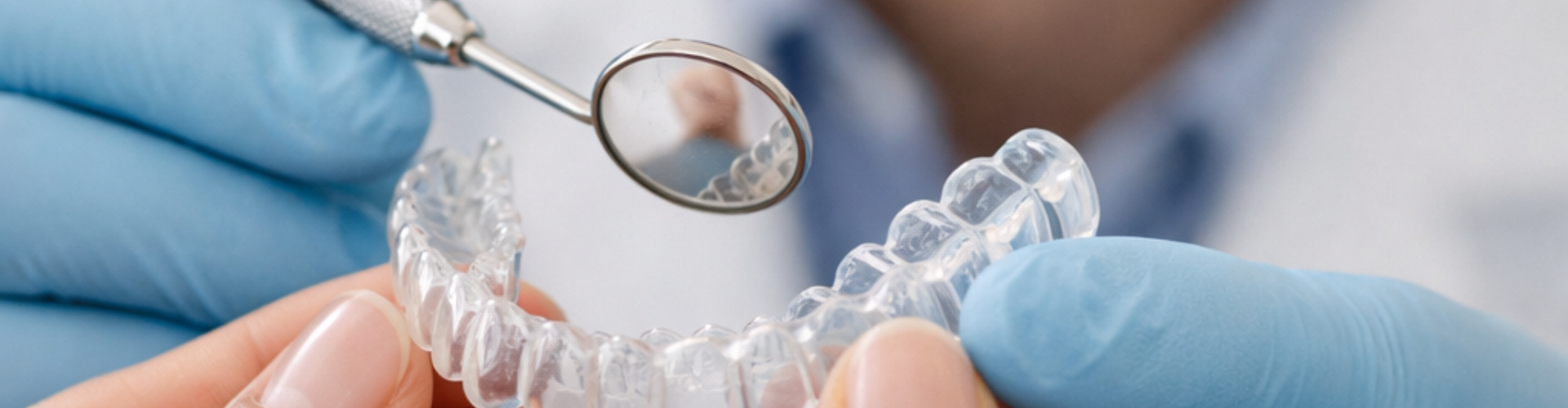
Written by Dr. Ali Tameemi, DDS
Medically Reviewed by Dr. Samir Alrajab, DDS
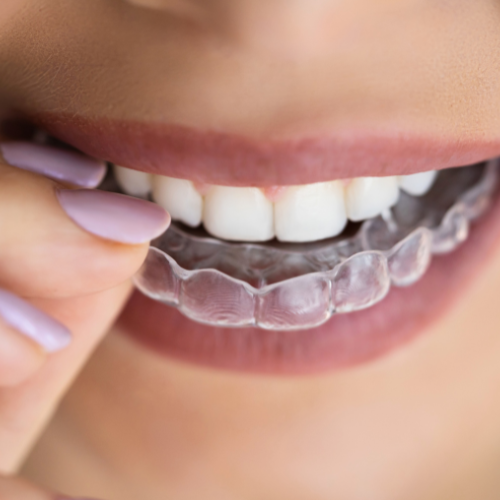
If you've ever pressed your Invisalign tray down and noticed a gap at the bottom — that little space between the plastic and your teeth — you're not alone. I hear this question constantly from patients here in Houston, especially in our Garden Oaks community. And honestly, it can feel alarming when you're doing everything right and the tray still won't sit flush.
But here's the thing: a small gap doesn't automatically mean something's wrong. Sometimes it means your teeth are catching up. Sometimes it means the tray needs attention. The difference matters — a lot — for your treatment outcome.
In this post, I'm going to walk you through three of the most common questions I get about Invisalign fit: why gaps happen, what "tracking" actually means, and how refinements work if things go sideways.
Look, this is probably the most common mid-treatment panic I see. A patient slides in their tray, pushes down, and there's still a visible gap along the lower teeth. They assume something broke or the tray was made wrong. Sometimes that's true. But not always.
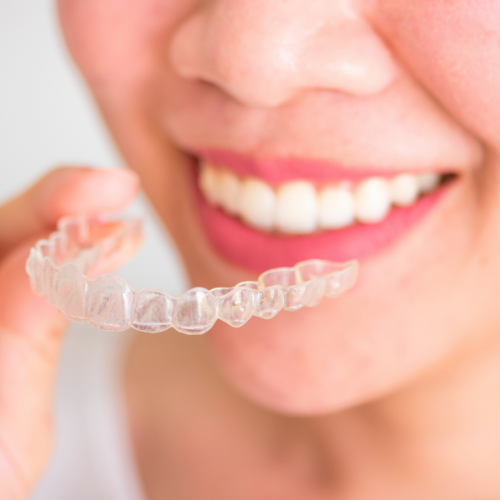
Here's why gaps happen. Invisalign trays are manufactured from thermoplastic sheets, and research using microCT imaging shows that even brand-new trays have a mean gap of around 269 micrometers between the aligner and the tooth surface. That's not a defect — it's just physics. The plastic has to be slightly larger than the tooth to slip on and off.
What I tell my patients: that gap usually tightens over the first couple of weeks. Studies actually show aligner fit improves with consistent intraoral wear, with the best adaptation happening around day 15. So if you're on day three of a new tray and there's a gap? Give it time.
But there are real culprits too.
Hot water. If you've been rinsing your trays under warm or hot water to clean them — stop. Heat warps the plastic, and a warped tray will never seat properly. Cold or lukewarm water only.
Not wearing them enough. You need 20 to 22 hours a day. I'm not 100% sure why some patients think 14 hours is "close enough," but my theory is that the number sounds inconveniently high and people round down. Don't. Poor wear time is the fastest route to a poor fit.
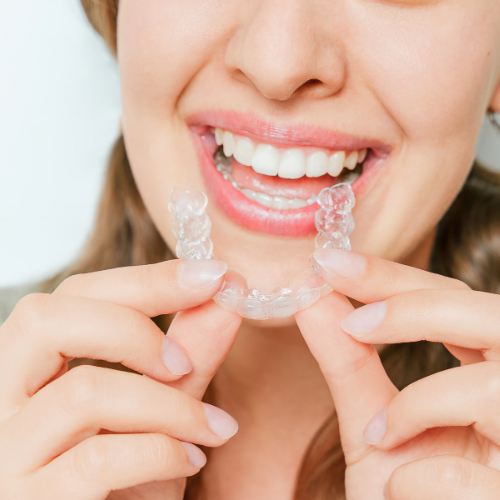
Chewies help. These little foam cylinders seat the tray against your teeth by closing those micro-gaps. Use them for five to ten minutes after inserting each tray — especially with a new set. If you want more detail on keeping your aligners in top shape, learn how to safely clean your aligners for best results.
And if the gap persists after a week or more? Call us. A tray that won't seat means the force isn't transmitting to your teeth correctly, which means your teeth aren't moving on schedule.
Tracking is one of those orthodontic terms that sounds technical but is actually pretty intuitive once you understand it. Basically, your Invisalign treatment was mapped out digitally using a software called ClinCheck — a 3D plan that shows exactly where every tooth should move at every stage. Tracking is how closely your actual teeth are following that plan.
Good tracking: your teeth match the tray. The tray fits snugly, the attachments (those small tooth-colored bumps bonded to your teeth) engage properly, and you're moving through the stages on schedule.
Poor tracking: your teeth have drifted from the planned positions. The tray might feel loose, or it might push unevenly on certain teeth, or — here's the sneaky one — it might feel fine but your teeth aren't actually where they should be.
Actually, scratch that — it depends on the movement type. Simple tilting movements tend to track well. Rotations, root movements, and torque are harder to predict and more prone to error. Research suggests Invisalign's average effectiveness for tooth movement is somewhere in the 41 to 50 percent range for complex movements — a finding consistent with what this blog outlines for patients considering treatment. That's not a failure; it's just why monitoring matters.
How do you know if you're off-track? A few signs:
I had a patient last month who had been quietly wearing her trays faithfully — 22 hours a day, using chewies, the works — but she'd skipped two check-in appointments. When she came in, she was three trays ahead of where her teeth actually were. Her teeth hadn't tracked, and we caught it later than we should have. Honest conversation, new plan, refinements ordered.
Bottom line? Don't skip your check-ins. That's how we catch tracking issues early.
Refinements are additional aligner sets ordered after your initial series is complete — or sometimes mid-treatment — to correct whatever movements didn't happen quite as planned. Think of them as a course correction.
And here's something I tell every new Invisalign aligners patient upfront: refinements are normal. They're not a sign of failure. Research shows that only about 6% of patients finish Invisalign without any refinements at all. The average patient needs around 2 to 3 refinement scans. So if you're in that group, you're in very good company.
Honestly, I think the stigma around refinements does patients a disservice. People feel like they did something wrong. They didn't. Complex tooth movements — rotations, vertical corrections, root positioning — are genuinely hard to predict perfectly. Even with the best digital planning, teeth sometimes have other ideas.
Here's how refinements work. Once your initial trays are done (or when we identify that tracking has gone off-course), we take a new digital scan of your teeth. That scan goes back to Invisalign, a new ClinCheck plan is created for the remaining movements, and a fresh set of aligners is fabricated. You pick them up, you wear them, and we monitor again.
Studies show that 65 to 78 percent of patients see meaningful improvement after their first refinement. But here's the honest part — after three or four rounds, the returns start to diminish. At that point, we'd have a conversation about whether additional refinements make sense or whether a different approach (like adding dental braces for specific teeth) would serve you better.
Treatment duration does extend with refinements. On average, Invisalign takes about 22.8 months — roughly five months longer than the initial estimate. That's not a surprise if you've been told upfront. It is a surprise if nobody mentioned it. We always mention it.
If your trays aren't fitting right, you're worried about tracking, or you're wondering whether you need refinements — come talk to us. At Nu Dentistry Garden Oaks, we work with patients across the greater Houston area every day on exactly these concerns. And we'd rather you call with a "probably nothing" question than quietly fall behind on your treatment.
Reach out to Nu Dentistry Garden Oaks to schedule your Invisalign check-in. We're here in Garden Oaks, and we're happy to take a look.
This content is for informational purposes only and does not replace professional medical advice, diagnosis, or treatment. Always consult with a qualified healthcare provider.
Fresh news from the dental world


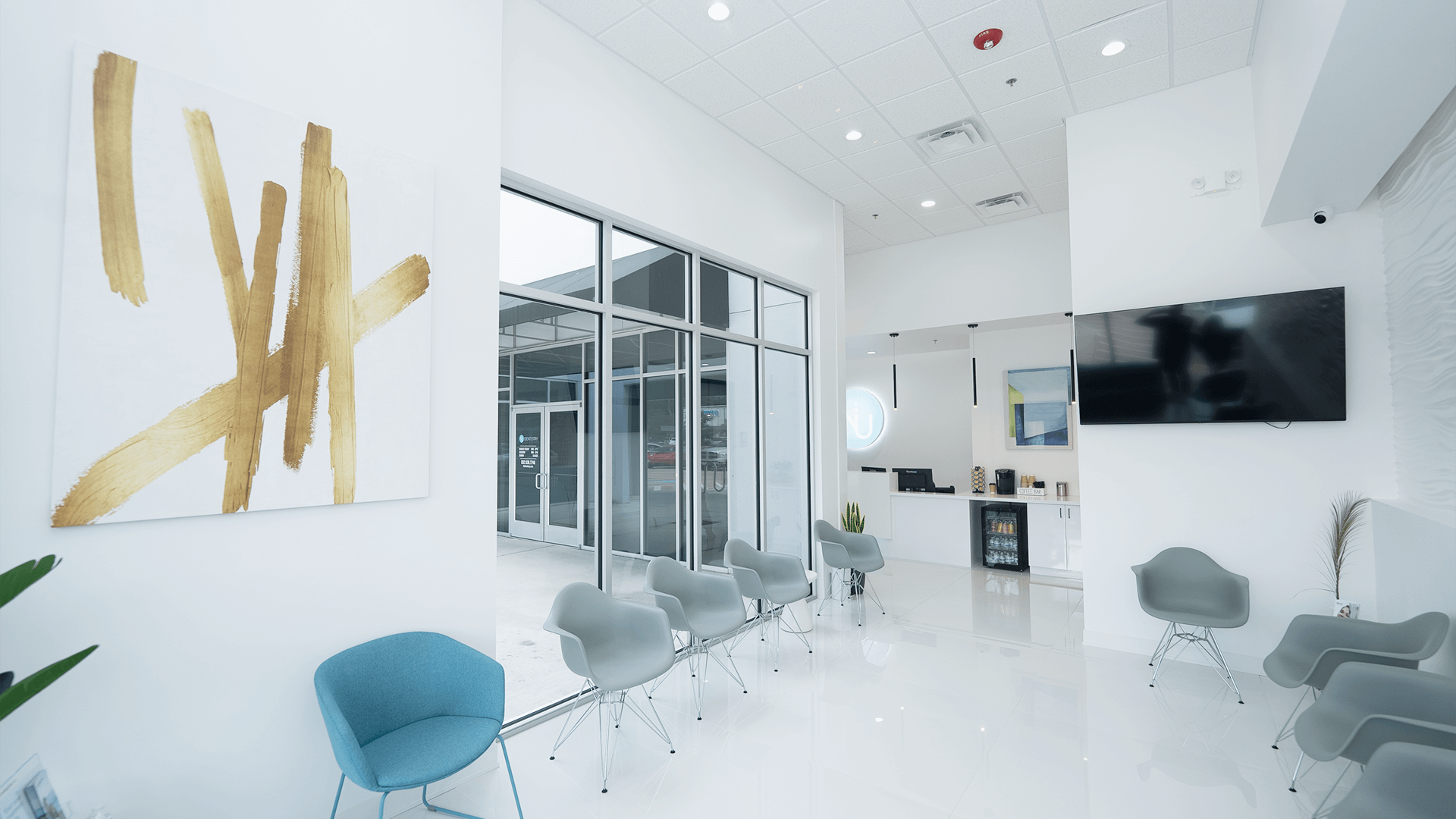
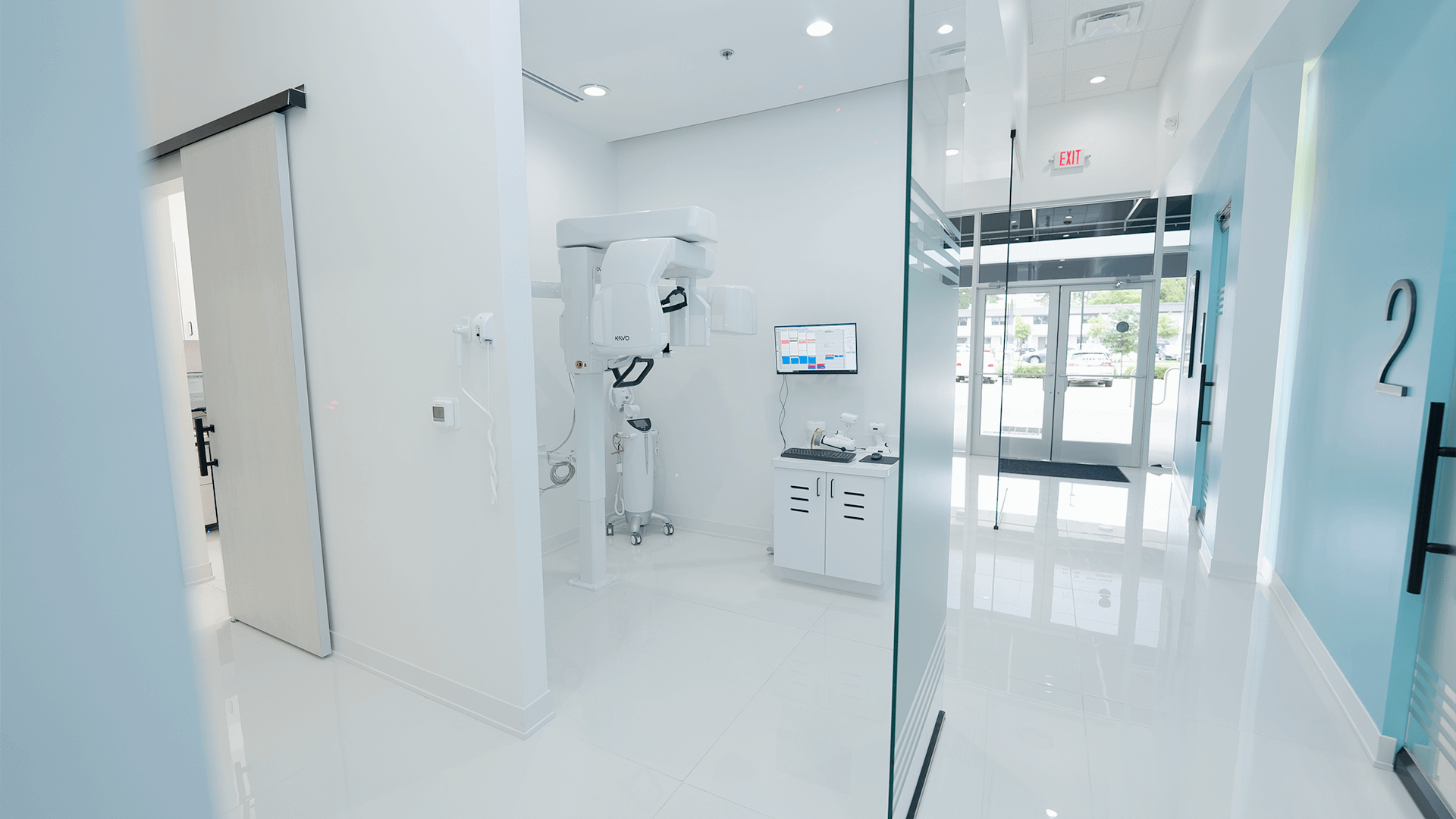
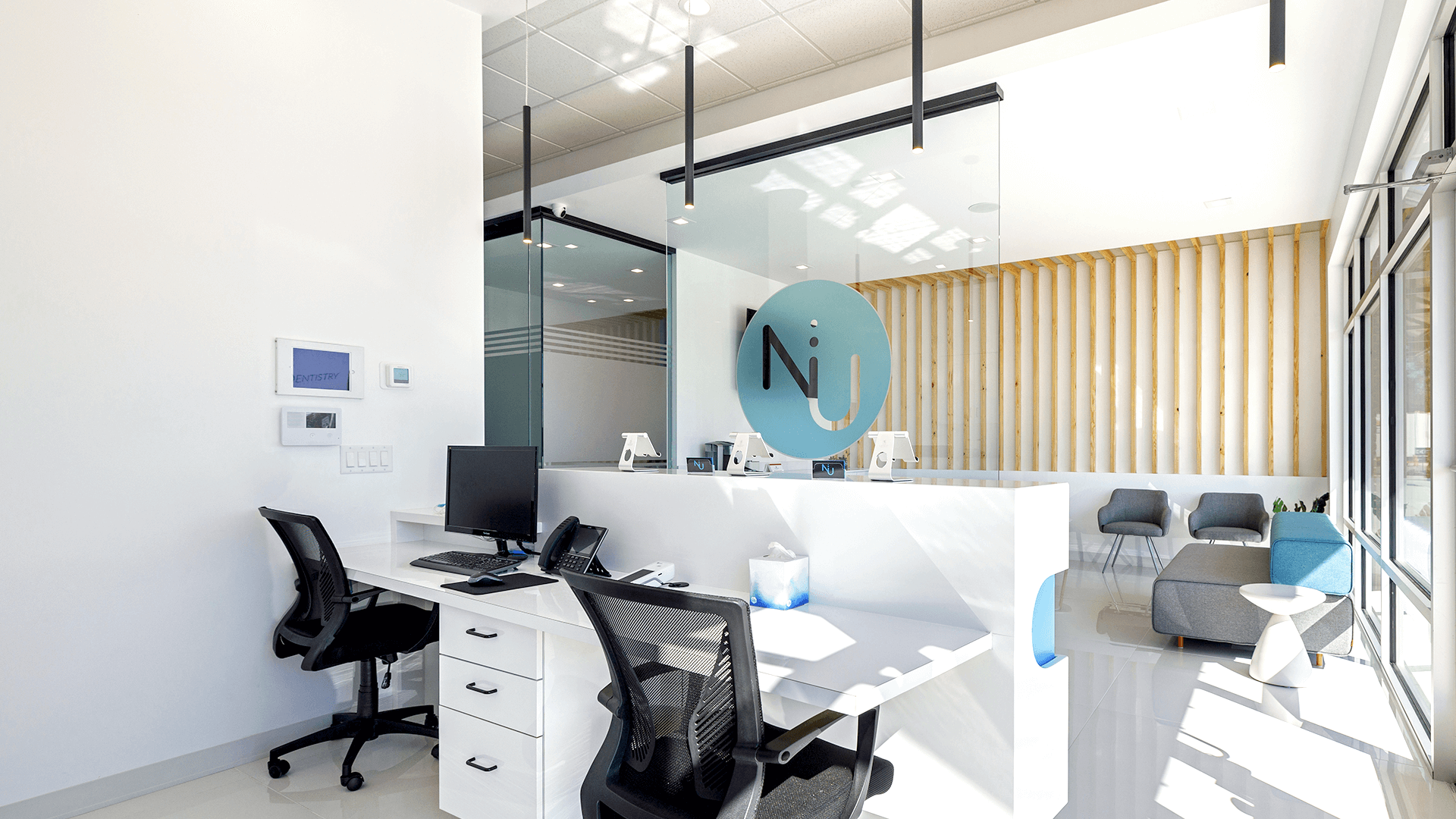
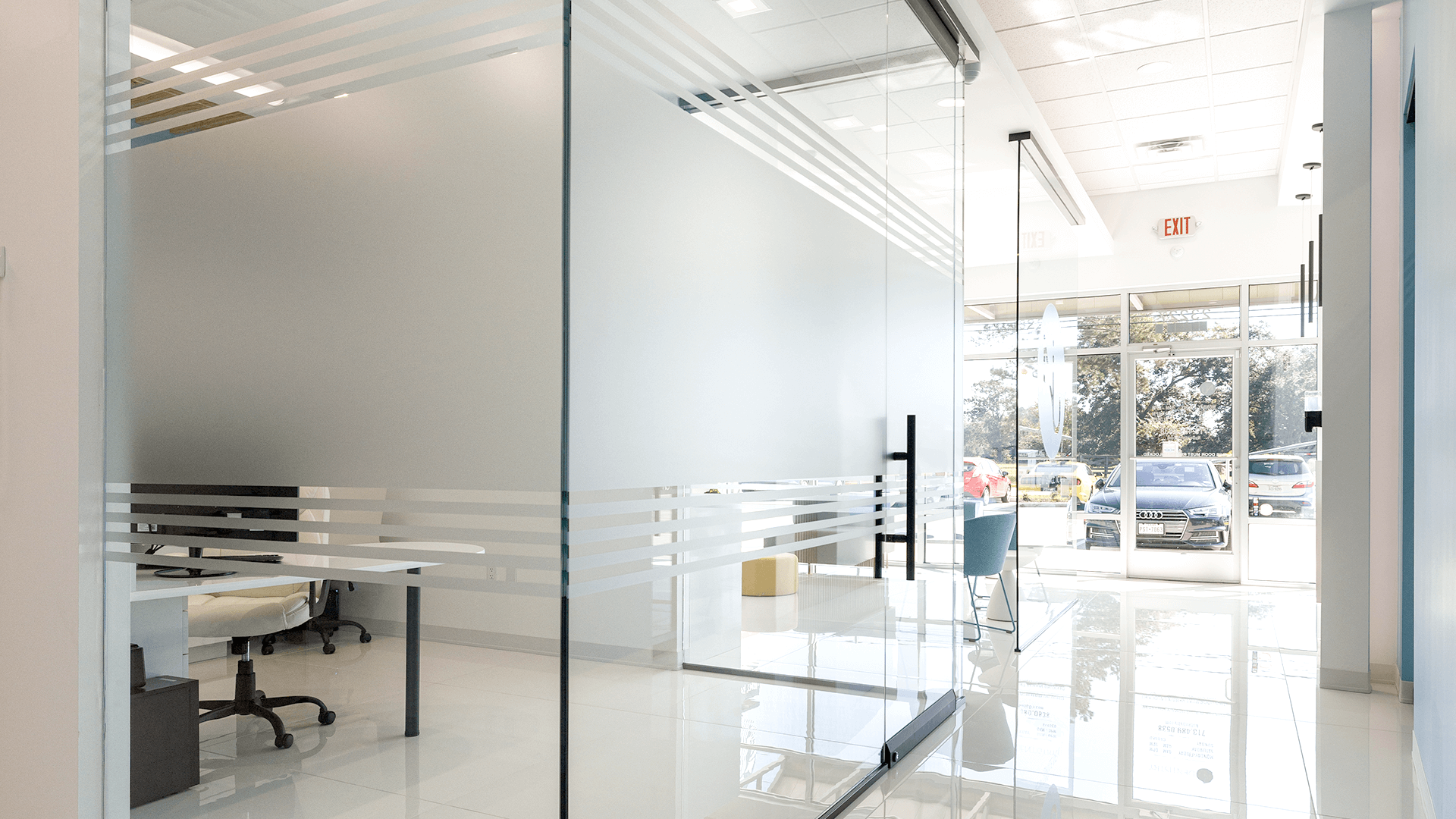
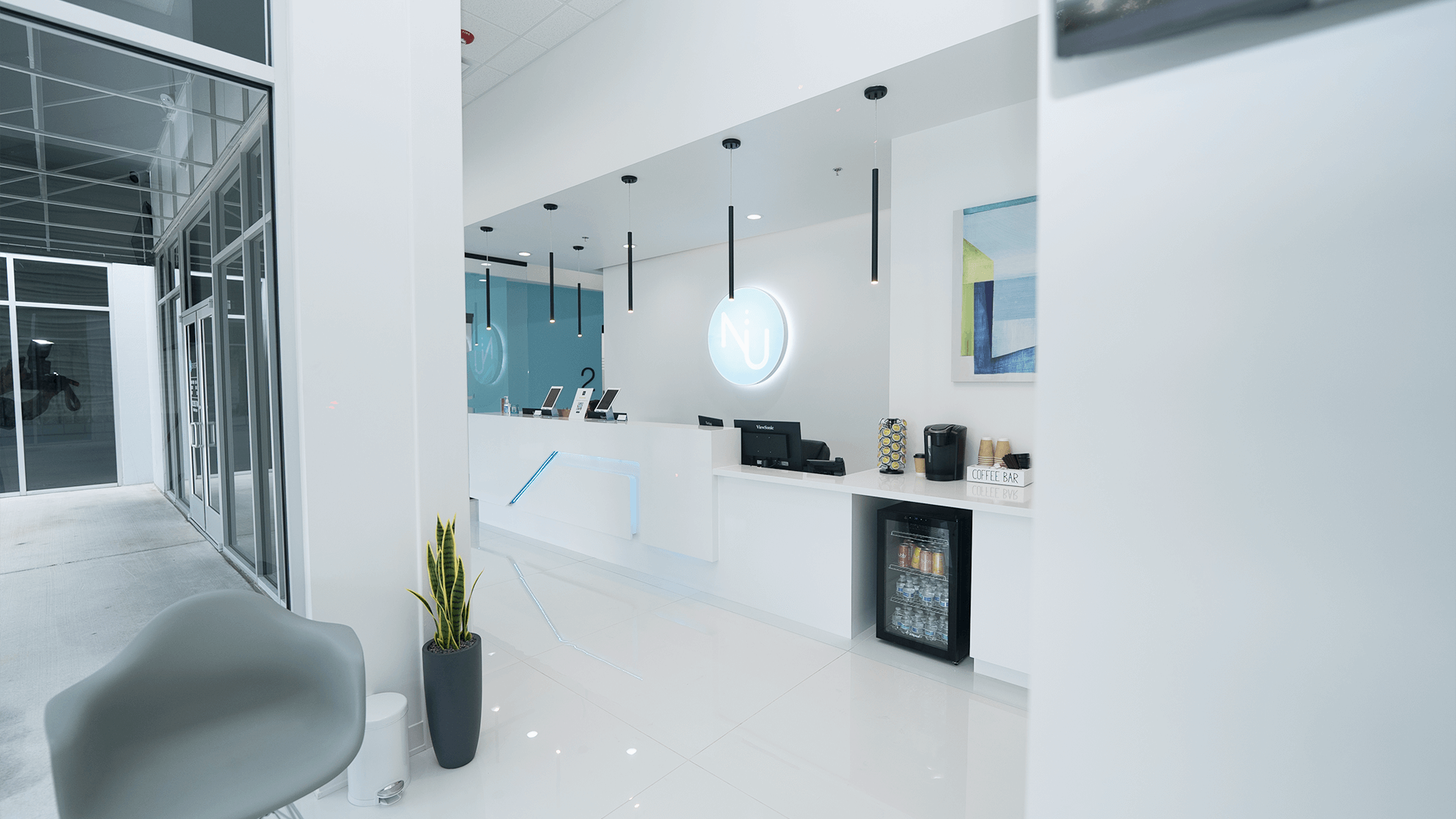
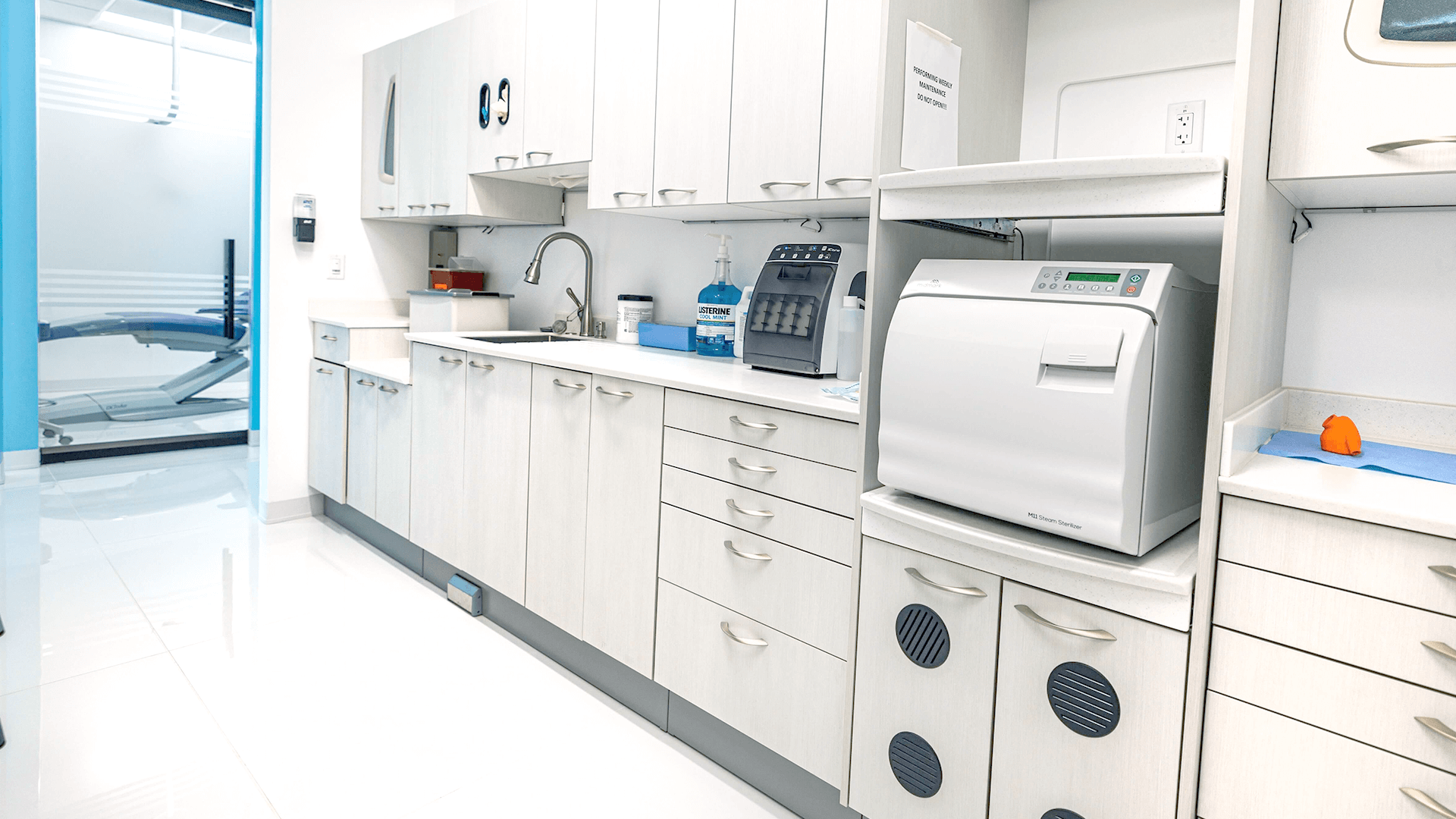
See what a visit to our modern, state-of-the-art dentist office is like!


Monday 9am - 6pm
Wednesday 9am - 6pm
Friday 9am - 6pm
Saturday 9am - 3pm
Check out what our patients are saying in Houston, TX


“Never Thought I'd Say It”
I never thought I’d say it, but going to the dentist is actually fun now. I recently came in for a root canal, and I got to sit back and catch up on Stranger Things without any pain!

“Anxiety Has Kept Me Away ”
I usually have such huge anxiety when I go to a dentist appointment, which means I always put off visits until the last minute to disastrous consequences. However, Dr. Loggins helped me with sedation, so the entire process was a breeze!

“The Best Dentist In Houston, TX”
We have been looking for a family dentist for a long time, we have tried a bunch of places but nothing felt quite like home. Not too long ago we stumbled upon Nu Dentistry and met Dr. Ali. Not only was he professional, kind, and gentle, but he always finds a way to fit us in when we need an appointment. He’s also pretty funny! I appreciate that he takes the time to explain what he’s doing, before he does it. That really puts me at ease.
“Never Thought I'd Say It”
I never thought I’d say it, but going to the dentist is actually fun now. I recently came in for a root canal, and I got to sit back and catch up on Stranger Things without any pain!
“Anxiety Has Kept Me Away ”
I usually have such huge anxiety when I go to a dentist appointment, which means I always put off visits until the last minute to disastrous consequences. However, Dr. Loggins helped me with sedation, so the entire process was a breeze!
We are proud members of these dental organizations and accreditations








We are dedicated to providing you with only the best quality dental care