SmileDirectClub Lawsuits, Results, and How It Compares to Invisalign
Wondering about SmileDirectClub lawsuits and if it works compared to Invisalign? Discover the facts from Nu Dentistry Garden Oaks. Read our expert review today!
Read More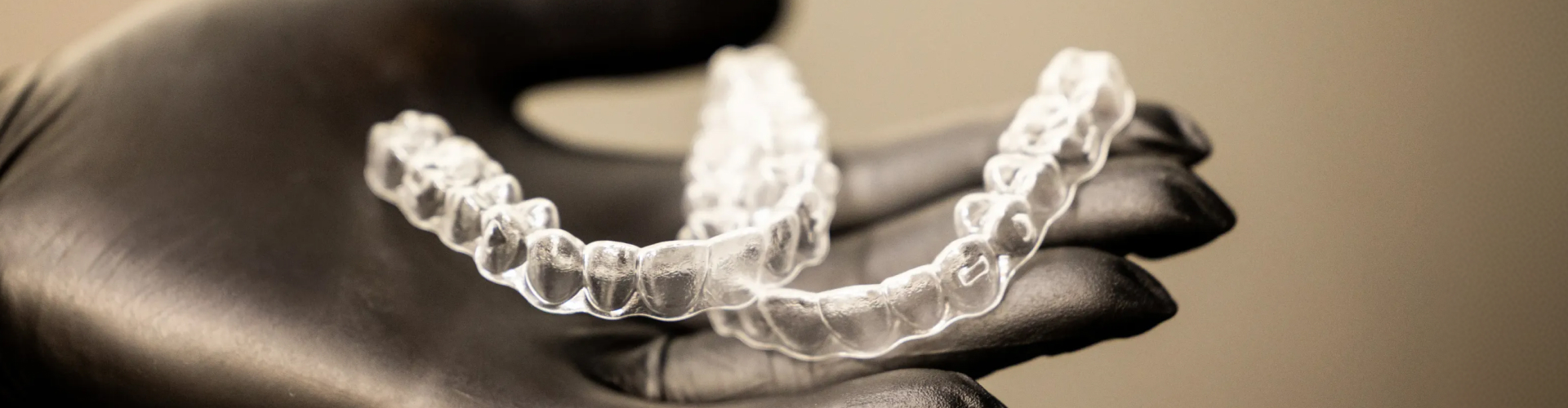
Medically Reviewed by Dr. Ali Tameemi
SmileDirectClub collapsed in late 2023, leaving hundreds of thousands of patients mid-treatment and sparking legal action over wrongful billing. While SDC marketed itself as a convenient, dentist-free alternative to Invisalign, clinical evidence and widespread patient harm tell a very different story — one that Houston-area patients still need help navigating.
SmileDirectClub filed for Chapter 11 bankruptcy in September 2023, then abruptly ceased all operations in December 2023 with almost no warning to active patients. Aligner orders were canceled, customer support vanished, and the "Lifetime Smile Guarantee" was quietly erased from the website.
The legal fallout was swift. New York Attorney General Letitia James recovered $4.8 million for more than 28,000 consumers nationwide who were billed for services after the company had already shut down — charges that continued despite SDC having no ability to deliver treatment.
For many patients, the financial crisis didn't end with the company's closure. Third-party loan servicers continued demanding monthly payments for aligners that were never delivered or for treatment that was abandoned mid-course. If you financed through a program like Healthcare Finance Direct (HFD), those payments didn't automatically stop. Under the FTC's Holder Rule, consumers have the right to assert claims against a creditor when the seller fails to deliver services. Filing a formal dispute under the Fair Credit Billing Act (FCBA) — with documentation including your SDC cancellation notice, proof of payments made, and evidence of non-delivery — is the recommended path to halting collections and protecting your credit report across Experian, Equifax, and TransUnion. Act quickly: negative marks can appear fast, but timely disputes with written evidence carry real legal weight.
The ADA urged its member dentists to offer free evaluations to abandoned patients, with ADA President Linda Edgar calling the closure "patient abandonment" and a direct consequence of the risks of direct-to-consumer dentistry.
Most comparisons between SDC and Invisalign focus on the obvious: one has a real dentist involved, the other doesn't. But the deeper problem is biomechanical.
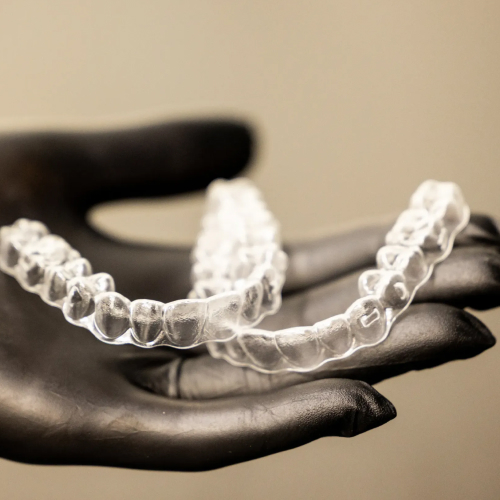
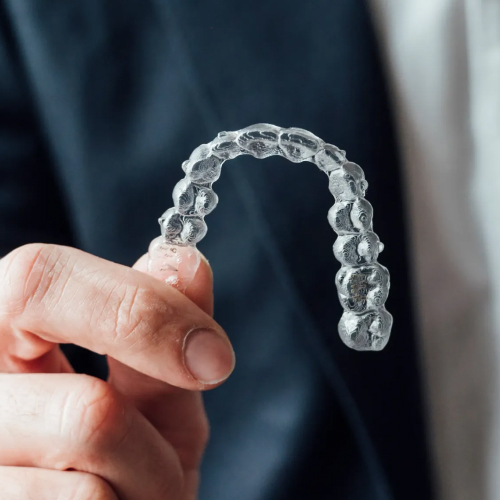
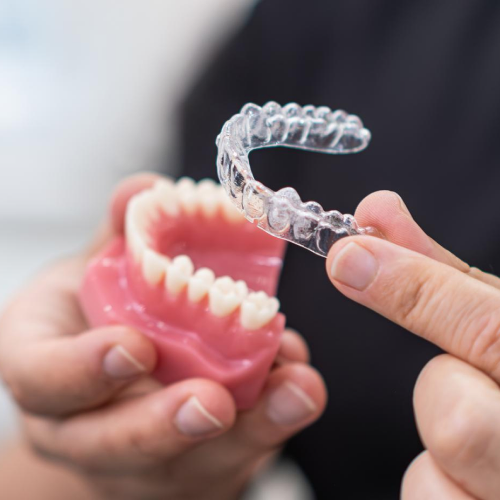
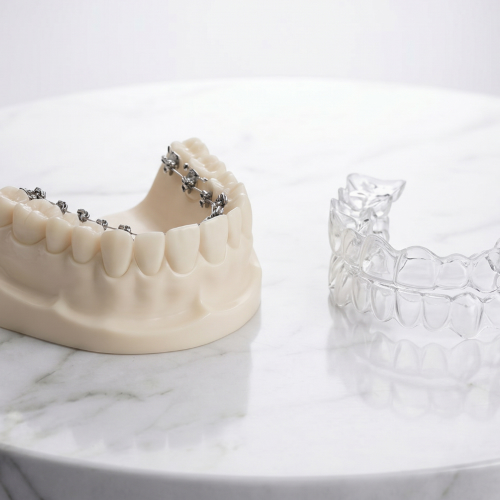
Effective clear aligner therapy requires more than plastic trays. Invisalign uses SmartForce composite attachments — small tooth-colored bumps bonded directly to teeth — that give aligners something to grip, enabling true bodily tooth movement, meaning the entire root moves, not just the crown. Without attachments, aligners can only tip the visible crown outward. The root stays largely in place.
SDC aligners frequently skipped attachments entirely. The result, documented in numerous clinical complaints, was that upper and lower back molars drifted apart — a condition called posterior open bite, where the back teeth no longer make contact. Patients often noticed their bite felt "off" or that only their front teeth touched. This isn't cosmetic. A collapsed posterior bite places abnormal stress on the jaw joint and front teeth, and in some cases, misguided crown tipping can push roots toward the thin outer wall of bone, risking cortical bone perforation.
Interproximal Reduction (IPR) — the careful reshaping of tooth surfaces to create space — is another tool that in-office providers use strategically to guide movement. Without proper IPR, aligners can create unintended spacing or fail to achieve predicted tooth positions at all.
As Healthline notes in its overview of clear aligners, direct-to-consumer companies rely on self-taken home impressions rather than trained dental technicians, meaning critical fit and bite issues can be missed before treatment even begins.
This is one of the most urgent questions for patients in the Greater Houston area who were left mid-treatment. The honest answer: yes, but it is rarely simple.
When a patient arrives at a dental office after SDC's closure, the first step is not to simply continue with the existing aligner plan. Before any tooth movement resumes, the provider must assess whether the teeth that were moving are now stable. Mobile teeth — teeth that shifted but haven't been held in place with a retainer — need time to stabilize. A CBCT scan can reveal root resorption (root shortening from prior movement) and whether any roots approached cortical bone boundaries.
Periodontal health must also be confirmed. Gum disease or bone loss around teeth that were moved without adequate clinical oversight can make continued movement dangerous until those issues are treated.
Here is the difficult reality: orthodontists and dentists cannot typically load an SDC digital treatment file and pick up where it left off. The prior plan was built on incomplete clinical data. Most providers will recommend a full new treatment plan — which means patients often pay for comprehensive treatment a second time. This is not a practice policy; it is a clinical necessity driven by the gaps in SDC's original assessment process.
According to the ADA, direct-to-consumer dentistry carries the risk of "irreversible harm" when patients are treated as customers rather than patients requiring clinical oversight.
For mild to moderate alignment cases, Healthline's overview of Invisalign confirms the treatment can address crowding, spacing, and bite issues — with the critical requirement of wearing aligners 20 to 22 hours daily. Compliance is non-negotiable.
What separates Invisalign from SDC is not just brand prestige. It is the clinical infrastructure around treatment: in-person cleaning and exam appointments, diagnostic imaging, attachment placement, IPR when needed, and regular progress checks. These touchpoints exist to catch problems before they become permanent.
The ADA's 2019 citizen petition to the FDA raised specific concerns that SDC's reliance on patient self-reporting did not meet the applicable standard of care for prescribing orthodontic treatment. Clear aligners are classified as Class II medical devices requiring a prescription — a regulatory designation that exists precisely because unsupervised tooth movement carries real risk.
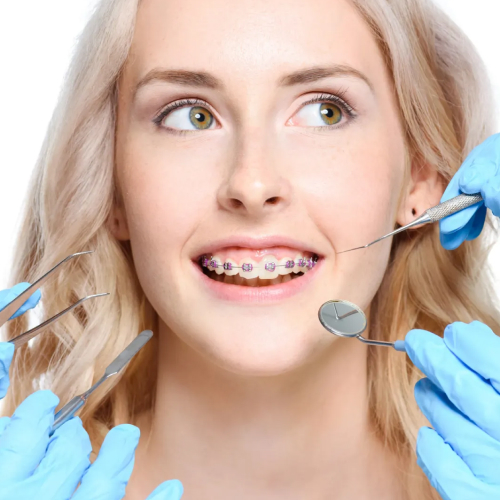
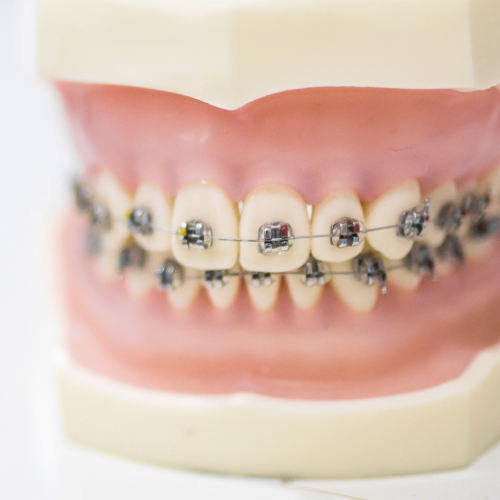
For complex cases — significant crowding, bite correction, or rotations — Invisalign under dentist supervision consistently outperforms what any remote-only platform can deliver. The trays alone are not the treatment. The clinical judgment guiding them is. In some cases, dental braces may be recommended as a more appropriate solution for achieving the necessary tooth movement.
If you were a SmileDirectClub patient left without a care plan, or if you're exploring clear aligners for the first time, professional evaluation is the essential first step. Nu Dentistry Garden Oaks serves patients across Houston, including the Garden Oaks community, and can assess where your teeth stand today — whether that means stabilizing a mid-treatment case or starting a supervised aligner plan from scratch. Our aesthetic dentistry services are designed to help you achieve the smile you were originally promised, with the clinical oversight that direct-to-consumer platforms failed to provide. Don't let an abandoned treatment plan become a permanent problem.
Medical disclaimer: This article is for informational purposes only and does not constitute dental or legal advice. Consult a licensed dental professional for diagnosis and treatment recommendations specific to your situation.
Fresh news from the dental world

See what a visit to our modern, state-of-the-art dentist office is like!
Monday 9am - 6pm
Wednesday 9am - 6pm
Friday 9am - 6pm
Saturday 9am - 3pm
Check out what our patients are saying in Houston, TX

“Never Thought I'd Say It”
I never thought I’d say it, but going to the dentist is actually fun now. I recently came in for a root canal, and I got to sit back and catch up on Stranger Things without any pain!
“Anxiety Has Kept Me Away ”
I usually have such huge anxiety when I go to a dentist appointment, which means I always put off visits until the last minute to disastrous consequences. However, Dr. Loggins helped me with sedation, so the entire process was a breeze!

“The Best Dentist In Houston, TX”
We have been looking for a family dentist for a long time, we have tried a bunch of places but nothing felt quite like home. Not too long ago we stumbled upon Nu Dentistry and met Dr. Ali. Not only was he professional, kind, and gentle, but he always finds a way to fit us in when we need an appointment. He’s also pretty funny! I appreciate that he takes the time to explain what he’s doing, before he does it. That really puts me at ease.
“Never Thought I'd Say It”
I never thought I’d say it, but going to the dentist is actually fun now. I recently came in for a root canal, and I got to sit back and catch up on Stranger Things without any pain!
“Anxiety Has Kept Me Away ”
I usually have such huge anxiety when I go to a dentist appointment, which means I always put off visits until the last minute to disastrous consequences. However, Dr. Loggins helped me with sedation, so the entire process was a breeze!
We are proud members of these dental organizations and accreditations



We are dedicated to providing you with only the best quality dental care