SmileDirectClub Lawsuits, Results, and How It Compares to Invisalign
Wondering about SmileDirectClub lawsuits and if it works compared to Invisalign? Discover the facts from Nu Dentistry Garden Oaks. Read our expert review today!
Read More
Medically Reviewed by Dr. Ali Tameemi
Ceramic braces and Invisalign cause discomfort in fundamentally different ways — one abrades soft tissue, the other creates sharp tensile pressure during tray removal. For working Houston adults, the right choice depends on your tolerance, daily routine, and treatment complexity.
Most comparisons reduce this to a generic comfort scale. That misses the point entirely.
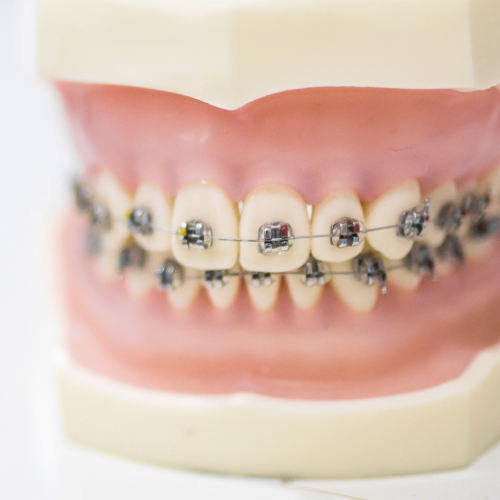
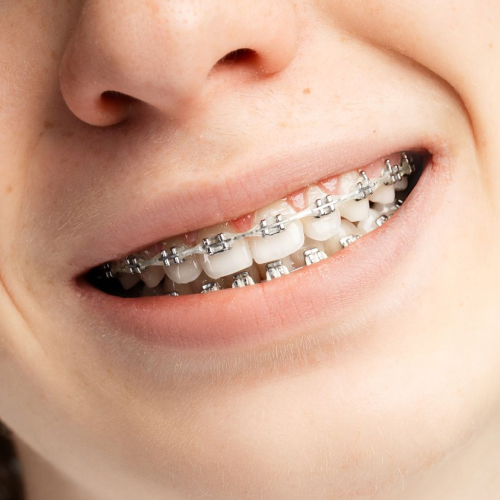
Ceramic brackets are physically larger than metal ones. That extra bulk presses against the inner lip and cheek continuously, creating mucosal friction and micro-ulcerations along the soft tissue. The discomfort is low-grade but persistent — a slow, grinding soreness that flares during meals and talking. According to WebMD, ceramic brackets are made from aluminum oxide rated near diamond-level hardness, which means the edges contacting your cheek tissue are unforgiving.
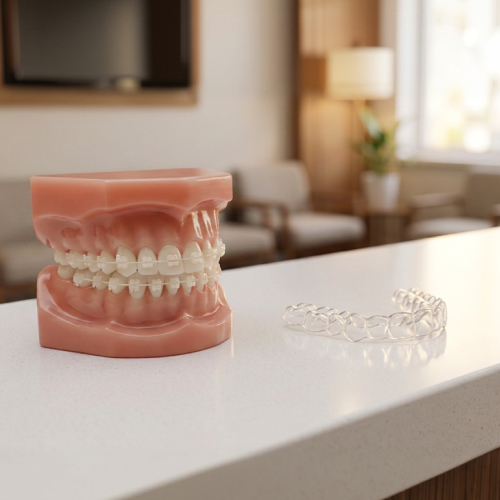
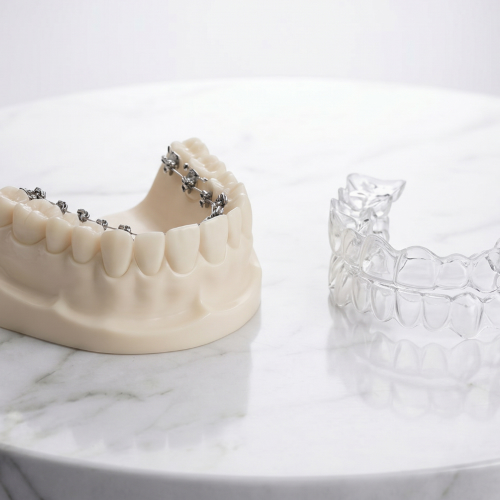
Invisalign discomfort works differently. The sharpest discomfort arrives in the first 48 hours of a new tray, when rigid plastic exerts tensile force across multiple teeth simultaneously. A Healthline overview of Invisalign discomfort notes that 54% of aligner wearers report mild discomfort, while 35% report none at all — and most symptoms peak within the first week of use. The real trigger for acute discomfort, though, is tray removal. When composite attachments are bonded to your teeth to help the aligner grip, pulling the tray free creates sharp leverage across those attachment points. That's a distinct, momentary discomfort — not the dull ache of bracket friction.
Peak discomfort triggers, side by side:
Neither option is free of discomfort. But they hurt in different situations, which matters enormously for how you live day-to-day.
Discomfort during treatment is expected. What surprises most patients is how the appliance comes off.
Ceramic brackets are brittle by design. During debonding, they frequently fracture under plier pressure rather than releasing cleanly from the tooth surface. That means the dentist must then use a rotary burr to grind residual bracket shards off your enamel — a process that involves sustained vibration, pressure, and prolonged chair time. Healthline's breakdown of ceramic braces confirms that the debonding process has been associated with enamel surface damage, a risk not present with metal braces.
Invisalign removal is comparatively straightforward. Composite attachments are buffed off with a polishing instrument in a matter of minutes. There's no bracket fracture, no aggressive mechanical force, and no extended drilling sensation.
If you're weighing long-term comfort — not just the daily experience but the full arc of treatment — the end-of-treatment phase is worth factoring in.
Aesthetics often dominate the adult orthodontics conversation. Functional comfort during the workday rarely does.
Invisalign introduces a foreign-body sensation against the tongue, especially during extended speaking. In back-to-back meetings or client-facing roles, this can cause speech fatigue and increased salivation. Some wearers also report dry mouth when breathing through the mouth while trays are in. The 20-to-22-hour daily wear requirement — as Healthline's Invisalign effectiveness guide outlines — means trays stay in through most of the workday, making mid-meeting discomfort a real consideration.
Ceramic braces eliminate the tray-management problem entirely. There's nothing to remove, reinsert, or store. But food impaction becomes a persistent issue at lunch. Particles trapped between ceramic brackets and the gumline can trigger localized gum soreness within hours if not cleared promptly — which means a bathroom hygiene stop after every meal isn't optional, it's necessary.
WebMD's piece on teeth straightening for older adults notes that clear aligners are often preferred by adults for their discretion, but the functional trade-offs — speech impact, removal routines — are equally worth weighing.
For adults with complex bite issues, ceramic braces remain more capable. WebMD's ceramic braces overview notes they handle a wider range of treatment scenarios than clear aligners, which are better suited to mild-to-moderate spacing issues. For patients whose complexity stems from underlying decay or damage, addressing issues like cavity fillings or a tooth crown before starting orthodontic treatment is often a necessary first step.
There's no universal answer here. The more useful question is: which discomfort pattern is more manageable for you specifically?
If persistent soft-tissue friction and post-meal hygiene demands sound tolerable, dental braces deliver reliable results for complex cases. If you'd rather manage brief, sharp discomfort during tray changes and keep brackets out of the picture entirely, Invisalign may suit your lifestyle better — provided your case qualifies.
Both options outperform traditional metal braces in discretion. The comfort comparison between them is more nuanced than most articles suggest.
If you're weighing ceramic braces against Invisalign in the Houston area, the right starting point is a conversation with a dentist who can assess your case directly. Before beginning any orthodontic treatment, a thorough cleaning and exam ensures your teeth and gums are in the best possible condition. Nu Dentistry Garden Oaks serves patients throughout Garden Oaks and Greater Houston, helping adults find the orthodontic path that fits their smile goals and their daily life. Reach out to schedule a consultation.
Medical disclaimer: This article is for informational purposes only and does not constitute professional dental or medical advice. Always consult a licensed dental provider for diagnosis and treatment recommendations specific to your situation.
Fresh news from the dental world

See what a visit to our modern, state-of-the-art dentist office is like!
Monday 9am - 6pm
Wednesday 9am - 6pm
Friday 9am - 6pm
Saturday 9am - 3pm
Check out what our patients are saying in Houston, TX


“Never Thought I'd Say It”
I never thought I’d say it, but going to the dentist is actually fun now. I recently came in for a root canal, and I got to sit back and catch up on Stranger Things without any pain!

“Anxiety Has Kept Me Away ”
I usually have such huge anxiety when I go to a dentist appointment, which means I always put off visits until the last minute to disastrous consequences. However, Dr. Loggins helped me with sedation, so the entire process was a breeze!

“The Best Dentist In Houston, TX”
We have been looking for a family dentist for a long time, we have tried a bunch of places but nothing felt quite like home. Not too long ago we stumbled upon Nu Dentistry and met Dr. Ali. Not only was he professional, kind, and gentle, but he always finds a way to fit us in when we need an appointment. He’s also pretty funny! I appreciate that he takes the time to explain what he’s doing, before he does it. That really puts me at ease.
“Never Thought I'd Say It”
I never thought I’d say it, but going to the dentist is actually fun now. I recently came in for a root canal, and I got to sit back and catch up on Stranger Things without any pain!
“Anxiety Has Kept Me Away ”
I usually have such huge anxiety when I go to a dentist appointment, which means I always put off visits until the last minute to disastrous consequences. However, Dr. Loggins helped me with sedation, so the entire process was a breeze!
We are proud members of these dental organizations and accreditations







We are dedicated to providing you with only the best quality dental care